
Choosing a standing seam metal roof is only the beginning of the decision. Once you have committed to the material, one of the most exciting and impactful choices you will make is color. The right color does not just look good on day one — it shapes how your home reads against its surroundings for the next 50 years. Understanding your standing seam metal roof colors options, how finishes behave over time, and what works best in Montana’s landscape helps you make that call with confidence. Before you start comparing swatches, take a few minutes to learn what sets a quality standing seam system apart from the rest.
Here’s what we’ll cover:
- How metal roof color affects performance: The relationship between color and energy efficiency
- The most popular colors in 2026: What homeowners are choosing and why
- Color and Montana architecture: Matching your palette to the regional landscape
- Finish systems explained: Why the coating matters as much as the color
- HOA and regional considerations: What to know before you commit
- How to make your final decision: A practical framework for narrowing down your choice
Why Color Is One of the Most Important Decisions in a Standing Seam Project
Color is not purely aesthetic on a standing seam metal roof. It directly affects the thermal performance of the roof surface, how visible the roof is from the street, how well it integrates with your home’s exterior materials, and how it holds up visually over the next several decades. A color that looks sharp on a sample chip in a showroom reads very differently on a full roof surface under Montana’s varied light conditions.
The other consideration unique to metal roofing is longevity. When you install an asphalt shingle roof, you are choosing a color that will be on your home for 20 to 30 years. With standing seam metal, you may be living with that color choice for 50 years or more. That timeline changes how you should think about trends, personal preference, and timelessness.
The Most Popular Standing Seam Metal Roof Colors in 2026

These colors dominate residential standing seam installations nationwide and for good reason. Each has proven versatility across a range of architectural styles and holds up well visually over the long lifespan of a metal roof.
1. Charcoal and Dark Graphite
Charcoal and dark graphite tones are the single most popular standing seam color choice for residential homes. The deep neutral reads as sophisticated and modern without being trendy, complements virtually any exterior siding material, and creates strong visual contrast against lighter trim and stonework. In Montana’s mountain and timber-frame architectural context, charcoal standing seam sits naturally alongside natural wood, stone, and board-and-batten siding.
- Best exterior pairings: Natural cedar or stained wood siding, light gray or white board-and-batten, stone veneer, and dark brick all work exceptionally well with charcoal metal
- Light behavior: Charcoal reads as consistently dark across all light conditions, making it a stable, predictable choice that avoids the visual instability of colors that shift dramatically between sun and shade
- Energy note: Darker colors absorb more solar heat in summer but provide a meaningful advantage in Montana winters by accelerating snow melt and stabilizing roof temperature
2. Matte Black
Matte black standing seam has become a defining color in contemporary residential architecture. Its flat, non-reflective finish eliminates the glare associated with glossy dark panels and produces a dramatic, clean-lined result that photographs exceptionally well. Black pairs with almost anything and has become a signature color in mountain modern and Pacific Northwest-influenced design that is increasingly present across Montana.
- Finish consideration: Matte finishes show fingerprints and surface contact more readily than satin or low-gloss options; this matters during installation but is rarely an issue on a completed, out-of-reach roof surface
- Heat absorption: Black roofing absorbs the most solar radiation of any color, which carries both a winter snow-melt benefit and a summer cooling consideration that is managed well with proper attic ventilation
- Architectural fit: Black standing seam works best on homes with clean lines, minimal ornamentation, and modern or contemporary design language
3. Slate Blue and Aged Copper Tones
Cool blue-gray and aged copper tones occupy the space between neutral and expressive, offering a distinctive character without committing to a bold or trendy color. Slate blue in particular has grown significantly in popularity as homeowners look for an alternative to charcoal that still reads as sophisticated and understated. Aged copper and patina tones reference the natural weathering of copper roofing without the cost or structural demands of the real material.
- Regional fit: Blue-gray tones complement Montana’s sky, water, and mountain palette naturally, reading as part of the landscape rather than imposing on it
- Siding pairings: Slate blue works particularly well with warm wood tones, cream or off-white siding, and natural stone, creating a cool-warm contrast that reads as intentional and refined
- Longevity consideration: Mid-range cool tones tend to age gracefully and remain stylish across long timeframes, making them a strong choice for a 50-year roofing system
4. Forest Green and Deep Olive
Green standing seam has a long history in American residential architecture, particularly in mountain, craftsman, and rural contexts. Forest green and deep olive tones integrate naturally into Montana’s forested and agricultural landscape, making them especially popular on rural properties, cabins, and homes surrounded by significant tree cover. The color reads as grounded and settled rather than imposing, which is a quality that serves homes in natural settings particularly well.
- Landscape integration: Deep green standing seam visually connects the roof to surrounding tree lines and natural vegetation, reducing the visual weight of the roof mass in heavily forested settings
- Historical precedent: Green metal roofing has been used on farmhouses, barns, and rural homes across the Northern Rockies for generations, giving it an authentic regional association
- Siding pairings: Natural wood stain, warm beige, cream, and weathered gray board-and-batten all complement forest green metal effectively
5. Weathered Gray and Silver
Weathered gray and silver tones reference the natural patina of unpainted zinc and aluminum, producing a finish that looks intentionally aged from the first day of installation. These colors work particularly well in contexts where a raw, material-honest aesthetic is part of the design intent, and they have become increasingly popular in contemporary farmhouse and industrial-influenced residential design.
- Galvalume reference: Bare Galvalume steel produces a similar silver-gray tone naturally as it weathers; painted weathered gray finishes replicate this appearance with the added protection of a Kynar 500 coating system
- Low visual impact: Gray and silver tones are among the least visually assertive roof colors, allowing the form and texture of the standing seam profile to read more clearly than the color itself
- Versatility: Silver-gray works across nearly every architectural style from contemporary to traditional craftsman, making it one of the safest long-term color choices for resale flexibility
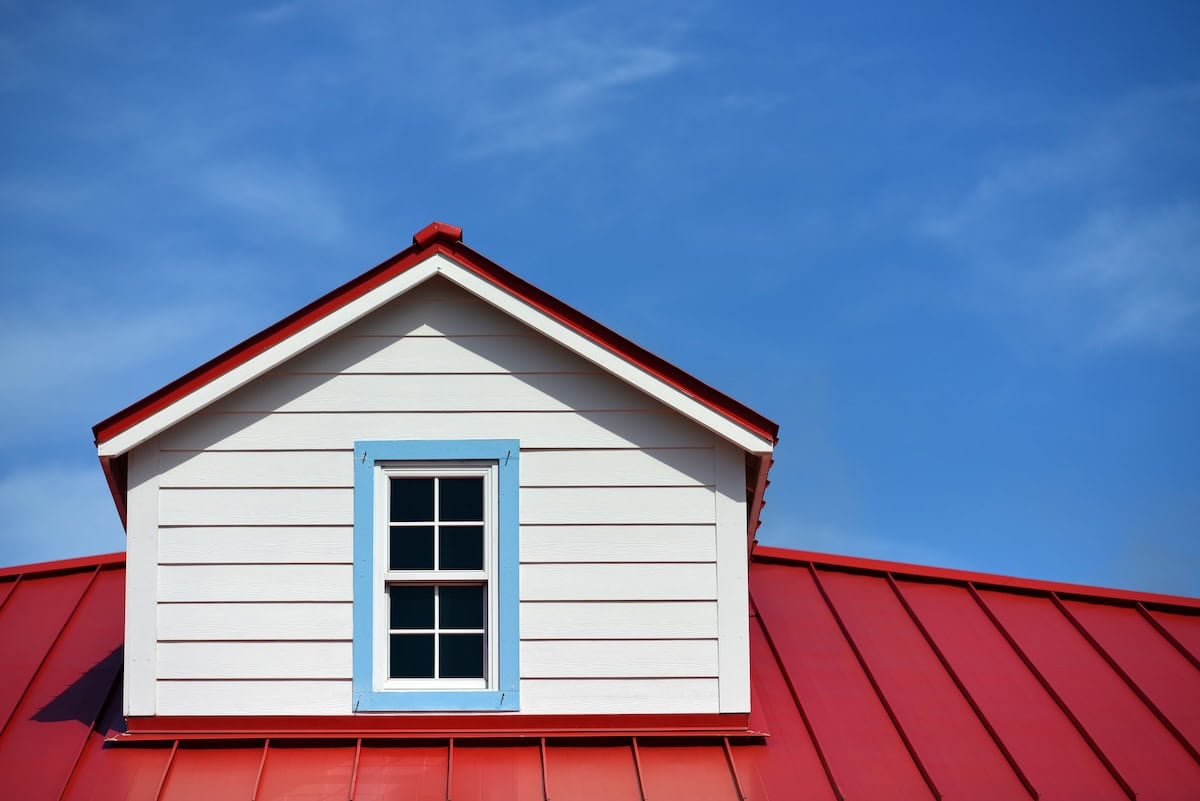
6. Barn Red and Deep Burgundy
Red standing seam has deep roots in American agricultural building tradition and has been recontextualized effectively in contemporary farmhouse residential design. Barn red and deep burgundy tones carry warmth and character that no other metal roofing color replicates, and when paired well with the right exterior materials, they deliver a result that is both striking and historically grounded.
- Regional context: Red metal roofing has a long presence in Montana’s agricultural landscape; using it on a residential home connects the property to that vernacular authentically rather than as a costume
- Siding pairings: White, cream, and light gray siding create the highest contrast with red metal and produce the most classic farmhouse result; natural wood stain offers a warmer, more rustic combination
- Color fade consideration: Red pigments have historically been more prone to fade than neutral tones; a quality Kynar 500 finish significantly reduces this risk, but it is worth confirming with your contractor
How Finish Coating Affects Color Performance

The color you choose is applied through a coating system, and the quality of that system determines how the color performs over decades. Not all metal roof coatings are equal, and the difference between a quality finish and a budget one becomes increasingly visible with age.
Kynar 500 PVDF (polyvinylidene fluoride) is the industry standard for high-performance metal roofing finishes. According to Arkema, the manufacturer of Kynar 500 PVDF resin, cool metal roofs coated with Kynar 500 PVDF can reduce energy consumption by up to 40% as part of a total system design, as reported by the Lawrence Berkeley National Laboratory. Beyond energy performance, Kynar 500 provides outstanding resistance to UV-driven color fade and chalking — two of the primary ways that metal roof colors degrade visually over time.
| Coating Type | Fade Resistance | Chalk Resistance | Typical Warranty | Best Use |
| Kynar 500 PVDF | Excellent | Excellent | 30 to 40 years | Premium residential and commercial |
| Silicone Modified Polyester (SMP) | Good | Good | 20 to 30 years | Mid-range residential |
| Polyester | Fair | Fair | 10 to 20 years | Budget applications |
| Bare Galvalume | N/A | N/A | Varies | Natural patina aesthetic |
Matching Color to Montana’s Architecture and Landscape
Color selection works best when it is guided by the specific context of your home rather than general trends. Montana’s landscape, building traditions, and climate create a distinct set of conditions that influence which colors perform well aesthetically and practically.
Homes in forested or heavily treed settings generally benefit from colors that integrate with the natural surroundings rather than contrasting against them. Forest green, weathered gray, and charcoal all read naturally in these contexts. Homes with long mountain or sky views, where the roof is seen against a wide horizon, can carry bolder or higher-contrast colors like matte black or slate blue without overwhelming the setting.
In Evergreen and surrounding communities where timber-frame, craftsman, and mountain-modern architecture are common, charcoal, matte black, and forest green are the colors we see most often paired successfully with local exterior materials. Dark bronze, slate blue, and weathered gray are also strong performers across Montana’s architectural landscape.
Montana Roofing Solutions is proud to serve homeowners in Evergreen, MT, and the surrounding communities with expert standing seam metal roofing installations, color consultations, and the certified craftsmanship that ensures your roof looks as good in 30 years as it does on day one.
Common Questions About Standing Seam Metal Roof Colors
These are the questions we hear most often from homeowners working through a color decision.
Will my standing seam roof color fade over time?
With a quality Kynar 500 PVDF finish, color fade is minimal over the roof’s lifespan. Kynar 500 coatings are specifically engineered to resist UV-driven fade and chalking, and most quality products carry 30 to 40-year paint warranties that cover color retention. Lower-grade SMP coatings fade more noticeably over time, which is one of the key reasons why finish quality matters as much as color selection.
Does roof color affect my energy bills in Montana?
Yes, to a meaningful degree. Darker colors absorb more solar radiation, which increases summer cooling demands but provides a real benefit in Montana winters by helping the roof shed snow more quickly and stabilizing roof temperature through freeze-thaw cycles. Lighter and medium tones reflect more solar radiation and reduce summer heat gain. The best color for energy performance in Montana depends on whether your home’s energy demands are primarily heating-driven or cooling-driven, which most Montana homes skew toward heating.
How do I know which color will look right on my specific home?
The most reliable way is to request large physical samples from your contractor and view them against your home’s actual siding, trim, and stone materials under natural light at different times of day. Digital rendering tools that place the roof color on a photo of your home are also useful as a starting point. Avoid making a final decision based solely on small color chips viewed indoors, as both scale and lighting significantly change how metal roof colors read in real conditions.
Can I change my standing seam roof color later if I want something different?
Repainting a standing seam metal roof is possible but involves significant preparation, specialized field-applied PVDF or SMP coatings, and is rarely a straightforward DIY project. The more practical approach is to choose a color you are confident will serve your home well for the long term rather than planning for a future color change. Given that standing seam roofs last 50 or more years, investing real time in the color decision upfront is well worth the effort.
Let Montana Roofing Solutions Help You Find the Right Color

A standing seam metal roof is a long-term investment, and the color you choose will define your home’s exterior for decades. At Montana Roofing Solutions, we bring the material knowledge, local context, and certified installation expertise to help you make a color decision you will be confident in from the first conversation to the final inspection. Get in touch with our team today to schedule a free consultation and start narrowing down your color options.