
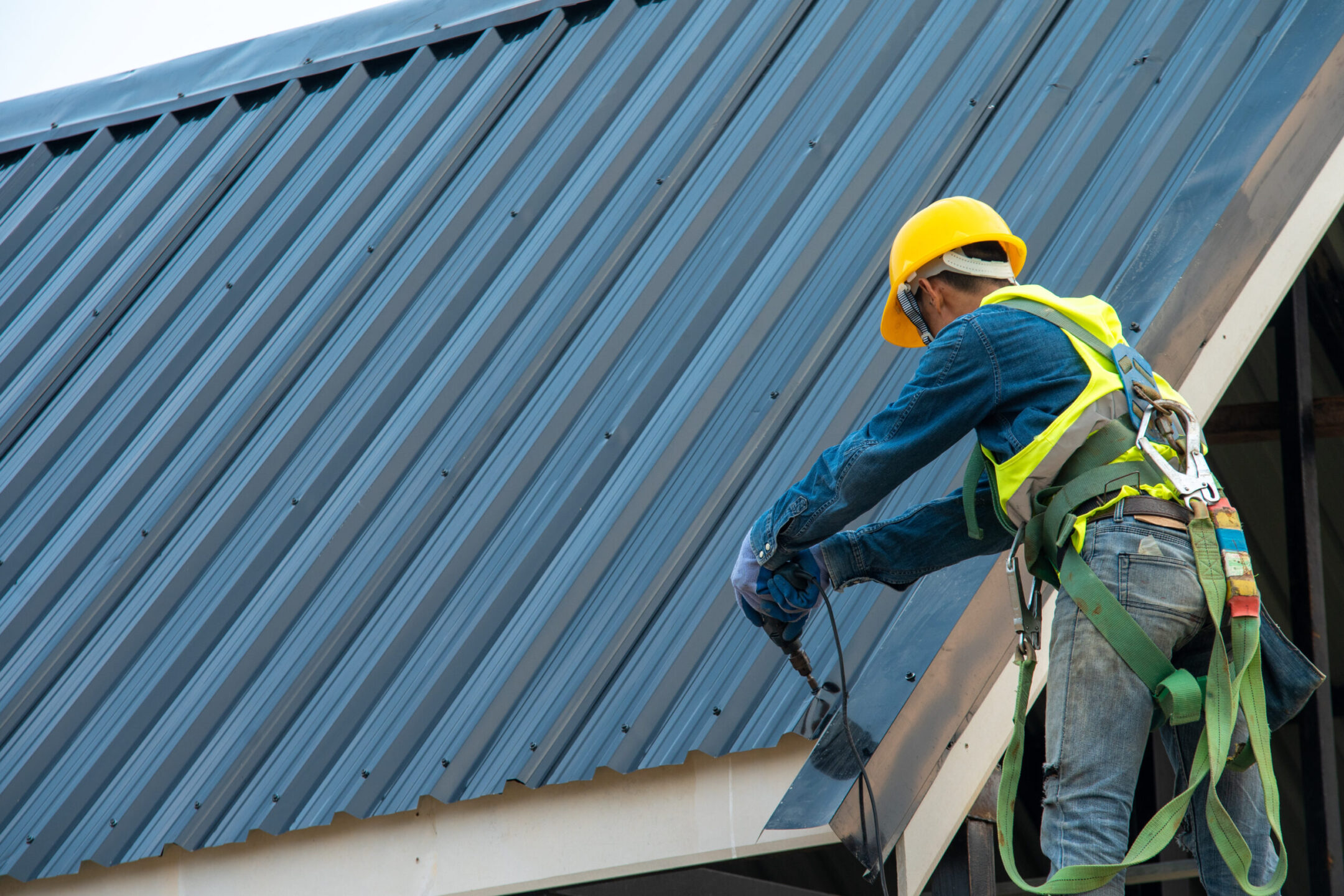
Metal roofing has come a long way from the corrugated panels of agricultural buildings. Today it is one of the most design-forward choices a homeowner can make, offering a range of profiles, finishes, and colors that complement everything from mountain modern architecture to contemporary craftsman homes. If you have been curious about metal roofing styles and what they look like in a residential setting, this guide breaks down the options clearly so you can find the right fit for your home’s aesthetic and your Montana climate. Explore what hidden fastener standing seam metal roofing looks like on a real home before you decide.
Here’s what we’ll cover:
- Standing seam metal roofing: The gold standard for modern homes
- Metal shingles: The look of traditional materials with metal’s durability
- Corrugated metal panels: An affordable option with a distinct character
- Metal tiles: A sophisticated alternative to clay or concrete
- Color and finish options: How coating choices shape the final look
- Choosing the right style for your home: Matching profile to architecture
Why Metal Roofing Is Having a Design Moment in 2026
Metal roofing has steadily moved from functional to fashionable over the past decade, and in 2026 it is firmly established as a premium residential choice. Advances in coating technology, panel profiles, and color options have expanded what is possible, while a broader shift toward clean-lined, low-maintenance home design has put metal roofing at the center of the conversation for homeowners doing full roof replacements.
In Montana’s architectural landscape, metal roofing fits naturally. The material complements the timber, stone, and board-and-batten exteriors common throughout the region, and its performance credentials, including outstanding snow shedding, hail resistance, and longevity, make it as practical as it is attractive. According to the Metal Roofing Alliance, metal roofing can achieve a 140-mph wind rating, meaning it can withstand wind gusts up to 140 miles per hour, a specification that matters significantly in areas like Lakeside where seasonal windstorms can be severe.
The Most Popular Metal Roofing Styles for Modern Homes
Each metal roofing style produces a distinct visual profile, and the right choice depends on your home’s architecture, your aesthetic preferences, and your budget. Understanding the differences between them helps you walk into a contractor conversation knowing what you want.
1. Standing Seam Metal Roofing
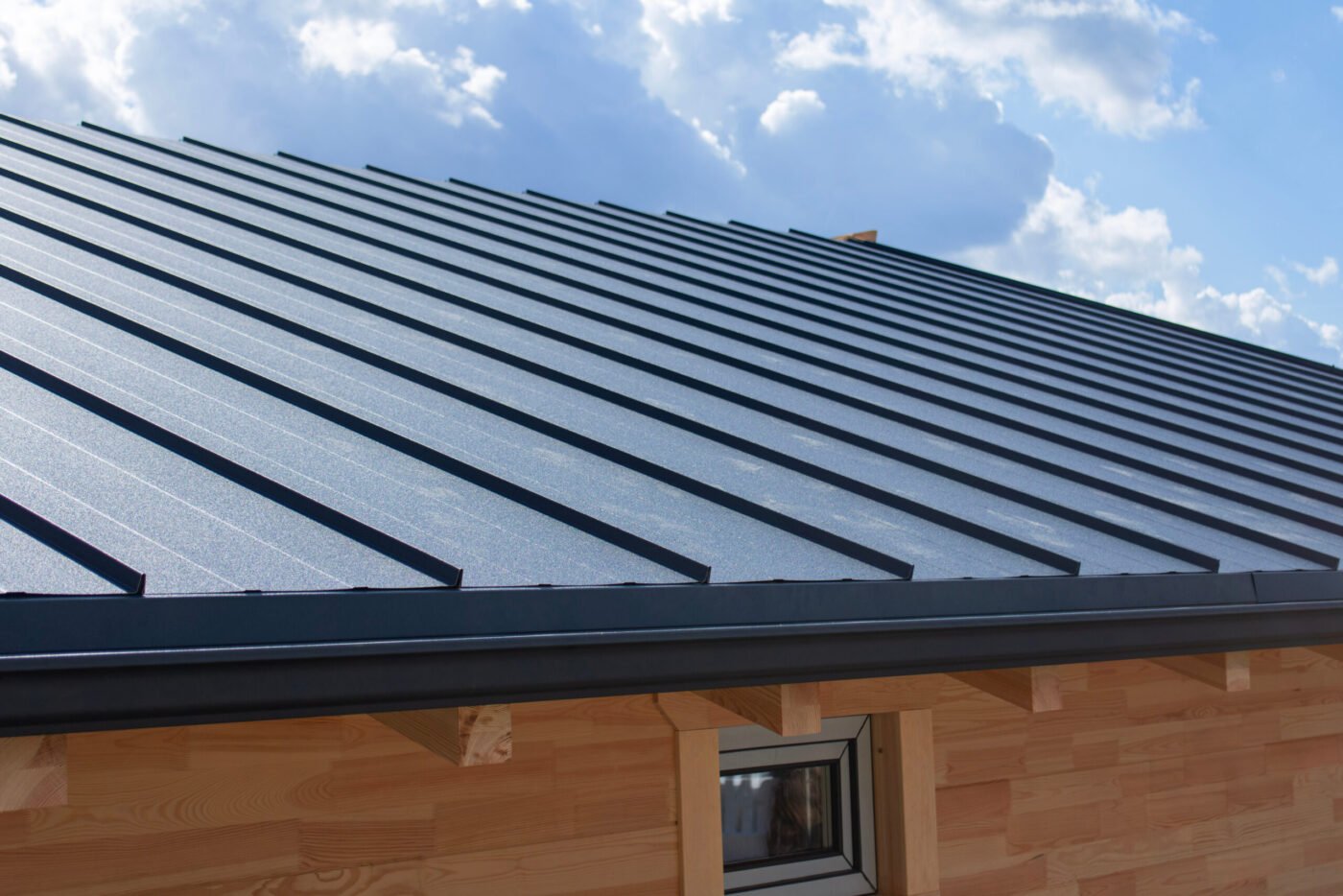
Standing seam is the defining metal roofing style of modern residential architecture. It features continuous vertical panels that run from ridge to eave, with raised seams connecting adjacent panels along their long edges. Hidden fasteners attach the panels to the roof deck through concealed clips, leaving the finished surface completely free of visible screws or nails. The result is a clean, uninterrupted surface with crisp linear geometry that reads as both contemporary and timeless.
- Seam profile options: Seam heights typically range from 1 to 2.5 inches; taller seams offer a bolder visual line and improved weather resistance
- Panel width: Narrower panels create a more linear, architectural look; wider panels read as calmer and more restrained
- Material options: Available in steel, aluminum, copper, and zinc, each with distinct color ranges, aging characteristics, and price points
- Best for: Modern, contemporary, and mountain-modern architecture where clean lines and minimal ornamentation define the design language
2. Metal Shingles
Metal shingles are stamped or formed to replicate the visual character of traditional roofing materials, most commonly asphalt shingles, wood shakes, or slate. They install in overlapping courses similar to their counterparts, producing a familiar residential roofing silhouette with the durability and longevity of metal beneath the surface. For homeowners who want a more traditional aesthetic without giving up the performance advantages of metal, shingles offer the best of both worlds.
- Asphalt shingle profile: The most common metal shingle style, producing a conventional roofline that blends well with existing neighborhood aesthetics
- Shake profile: Textured stamping creates dimensional shadow lines that closely mimic the look of cedar shakes without the maintenance demands
- Slate profile: Smooth, low-profile panels mimic the refined appearance of natural slate at a fraction of the weight and cost
- Best for: Traditional, craftsman, and transitional home styles where a conventional roofline is preferred but metal’s durability is the priority
3. Corrugated Metal Panels
Corrugated metal panels feature a repeated wave or ridge pattern pressed into the panel surface. They are among the most cost-effective metal roofing options and have a strong design presence in industrial, farmhouse, and rustic contemporary architecture. When used intentionally, corrugated metal delivers a character and texture that no other panel profile replicates.
- Wave profiles: Standard corrugated panels use a sinusoidal wave; R-panel and 5-V crimp variations offer a sharper, more angular ridge
- Design context: Corrugated metal reads most naturally on homes with farmhouse, rural modern, or industrial aesthetic influences
- Exposed fastener system: Most corrugated installations use exposed fasteners, which keeps costs lower but requires periodic inspection of fastener seals
- Best for: Farmhouse, rural modern, and accessory structures where a raw, textural aesthetic is part of the design intent
4. Metal Tiles
Metal tiles are formed to replicate the dimensional profile of clay or concrete tile roofing, producing a Mediterranean or Spanish-influenced aesthetic at a fraction of the weight. Where natural clay tile can weigh three to four times more than asphalt shingles, metal tiles deliver a comparable visual result without requiring structural reinforcement in most cases. This makes them a practical path to a tile-inspired look on homes that were not originally built to support the load of natural materials.
- Profile options: Barrel tile, flat tile, and mission tile profiles are the most common, each producing a distinct shadow line and visual texture
- Weight advantage: Metal tiles typically weigh 1 to 1.5 pounds per square foot compared to 9 to 12 pounds for natural clay tile
- Color range: Baked-on finishes are available in the warm earthy tones traditionally associated with tile roofing as well as more contemporary neutrals
- Best for: Mediterranean, Spanish colonial, and Tuscan-influenced home styles where the tile profile is central to the architecture
5. Snap-Lock Panels
Snap-lock panels are a variation of standing seam that uses a factory-formed locking edge rather than a mechanically seamed joint. They install faster than traditional standing seam and are available at a lower price point, making them a popular choice for homeowners who want the visual character of standing seam without the full premium of a mechanically seamed system. The aesthetic is very similar to traditional standing seam, though the seam profile is slightly lower and less pronounced.
- Installation speed: Snap-lock panels do not require a seaming machine on-site, which reduces labor time and installation cost compared to mechanical seam systems
- Seam appearance: The finished seam is clean and linear, nearly indistinguishable from mechanical standing seam to most observers
- Pitch requirements: Snap-lock systems require a minimum roof pitch to perform correctly; low-slope roofs are better suited to mechanically seamed systems
- Best for: Homeowners who want the modern standing seam aesthetic at a more accessible price point with strong overall performance
6. Ribbed or Structural Panels
Ribbed metal panels feature raised ribs at regular intervals across the panel face, creating a bold, rhythmic pattern that differs from the continuous vertical seams of standing seam. Originally developed for commercial and agricultural applications, ribbed panels have found a strong following in contemporary residential design, particularly in homes where an honest, industrial material palette is intentional.
- Rib spacing and height: Different profiles produce dramatically different visual results; closer ribs read as more textural while widely spaced ribs create a cleaner, more geometric appearance
- Structural capacity: Many ribbed panel profiles carry structural ratings that allow them to span between purlins without continuous decking, reducing material costs in some applications
- Color versatility: Available in a wide range of painted finishes, ribbed panels can read as modern and refined or raw and industrial depending on color selection
- Best for: Contemporary, industrial modern, and commercial-influenced residential designs where bold material character is a design asset
How Color and Finish Shape the Final Look

Style and profile are only half of the metal roofing aesthetic equation. Color and finish selection have an enormous impact on how the finished roof reads against the home’s exterior. The same standing seam profile in matte charcoal versus weathered zinc produces two completely different design results.
| Finish Type | Visual Character | Maintenance | Best Match |
| Kynar 500 painted steel | Clean, consistent color | Low, fade-resistant | Modern and contemporary |
| Galvalume bare steel | Industrial silver-grey | Low, patinas subtly | Farmhouse and industrial modern |
| Weathering steel (Corten) | Deep rust-orange patina | Minimal | Rustic contemporary |
| Copper | Warm metallic, ages to verdigris | None required | Traditional and craftsman |
| Zinc | Blue-grey, natural patina | None required | European-influenced modern |
| Aluminum painted | Lightweight, wide color range | Low | Coastal and mountain modern |
Matching Metal Roofing Style to Your Home’s Architecture
Choosing the right metal roofing style is ultimately about reading your home’s design language and selecting the profile and finish that reinforces it rather than fighting it.
Modern and contemporary homes with clean lines, flat or low-slope roof sections, and minimal ornamentation benefit most from standing seam or snap-lock systems in matte, low-reflectance colors. Charcoal, dark bronze, and graphite are strong performers in this context and complement the natural material palettes common in Montana mountain architecture.
Transitional and craftsman homes with more traditional proportions and decorative detailing tend to read better with metal shingle profiles that echo the texture and shadow lines of conventional roofing. A shake-profile metal shingle in a warm bronze or weathered brown bridges the gap between performance and familiarity without visual conflict.
Farmhouse and rural modern homes have the most flexibility. Standing seam, corrugated, and ribbed panels all carry natural associations with agricultural building traditions that translate well into contemporary farmhouse design. White, galvalume, and barn red are classic choices that have been recontextualized effectively in modern rural residential architecture.
Montana Roofing Solutions is proud to serve homeowners in Lakeside, MT, and neighboring communities with certified metal roofing installations, expert material guidance, and the local knowledge that makes the difference between a roof that looks great for a season and one that looks great for decades.
Common Questions About Metal Roofing Styles
Homeowners exploring metal roofing for the first time consistently ask the same questions. Here are clear answers to the ones we hear most.
Which metal roofing style lasts the longest?
All properly installed metal roofing systems offer significantly longer lifespans than asphalt shingles, but the installation method matters as much as the profile. Standing seam systems with hidden fasteners outperform exposed fastener systems over time because they eliminate the primary failure point — fastener seal degradation from thermal movement. A 24-gauge hidden fastener standing seam system installed by a certified contractor is the most durable residential metal roofing configuration available.
Does metal roofing style affect performance in snow and cold climates?
Yes, to a degree. Standing seam and smooth-faced profiles shed snow more readily than textured metal shingle or tile profiles because the uninterrupted surface offers less friction. In Montana’s snow-heavy winters, standing seam’s snow-shedding advantage can reduce structural load on the roof and minimize ice dam formation along the eaves. Snow guards are commonly added to metal roofs to control where snow releases rather than prevent shedding entirely.
Can I match a metal roof to an existing exterior color scheme?
Absolutely. Modern Kynar 500 painted finishes are available in hundreds of standard and custom colors that can be matched or coordinated with virtually any exterior palette. Working with a contractor who has access to color samples and can provide digital renderings of the finished result helps homeowners visualize the combination before committing to a specific color.
How does metal roofing affect home resale value?
Metal roofing consistently earns recognition as a premium feature in residential real estate. Buyers understand that a metal roof means lower maintenance, longer lifespan, and better weather resistance, all of which are compelling selling points in Montana’s climate. Homes with quality metal roofing typically command a premium over comparable homes with aging asphalt shingle roofs, particularly in markets where storm damage and roof replacement costs are a known concern.
The Montana Roofing Solutions Difference on Metal

Selecting the right metal roofing style is only the beginning. The installation quality, the gauge of the material, the fastener system, and the contractor’s certification all determine whether that roof performs the way it should for the next 50 years. At Montana Roofing Solutions, we specialize in hidden fastener, 24-gauge standing seam metal roofing built for Montana’s climate and installed to the standards that protect your warranty and your investment. When you are ready to see what modern metal roofing can look like on your home, reach out to our team and let us put together a free consultation.