
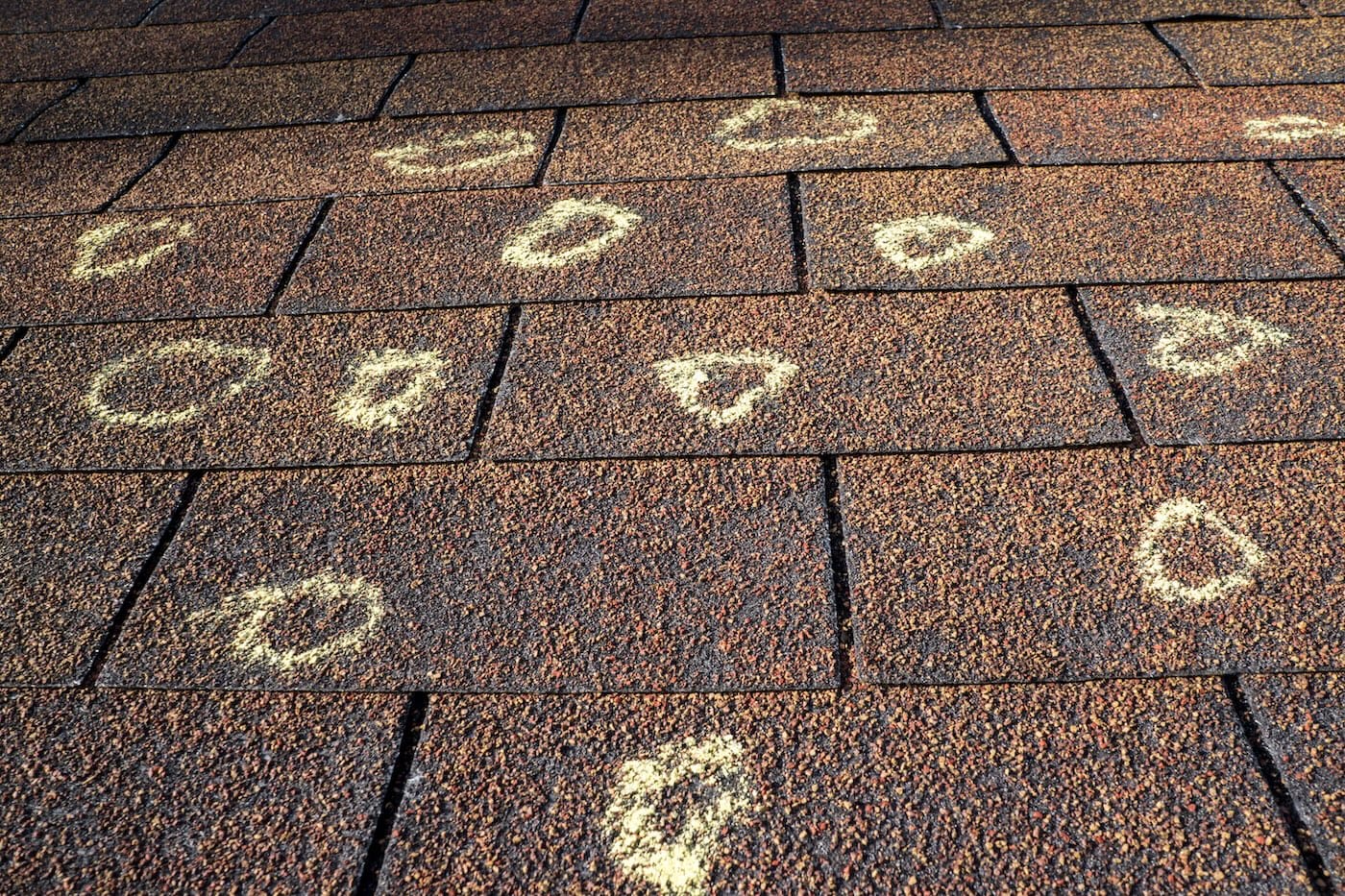
Understanding hail damage vs blistering is essential for homeowners who want to protect their roofs and avoid costly repairs. While these issues may appear similar at first glance, they form for very different reasons and require different repair strategies. Knowing how to identify each type of damage helps you make informed decisions and maintain the long term health of your roofing system.
This guide will cover:
- Key warning signs: How to tell the difference between hail damage and blistering
- Primary causes: What leads to each type of roofing issue
- Repair options: How professionals address these problems
- Prevention tips: What homeowners can do to reduce future damage
- Cost considerations: How expenses and insurance coverage vary
Why Understanding These Roofing Issues Matters
Homeowners in areas like Bigfork, MT experience frequent weather changes, including the occasional hail storm, that can severely impact roofing systems. These conditions increase the likelihood of hail damage as well as gradual roof blistering. Being able to distinguish between the two helps you identify the correct solution and ensures repairs are handled efficiently. When roof damage is misdiagnosed, homeowners may spend more on repairs or fail to fix the underlying cause.

Both forms of damage affect your roof surface differently. Hail creates sudden indentations or dented shingles, while blistering develops slowly from moisture or trapped heat. Understanding these differences ensures the right approach is taken to restore and protect your roof.
The Main Causes and Characteristics of Hail Damage vs Blistering
Both hail damage and blistering affect asphalt shingles, but the visual results and underlying causes vary significantly. Homeowners should understand what each problem looks like so they can identify issues before they spread.
Hail damage explained
Hail damage occurs when frozen precipitation strikes the surface of your roof with enough force to leave impact marks. These impacts can break granules free, dent the shingle surface, or weaken the shingle layer beneath. Homes that experience severe storms often show several distinct signs after a hail event.
- Surface dents: Dented shingles appear where hailstones made direct contact.
- Granule loss: Protective granules fall away, exposing the asphalt layer.
- Broken shingle edges: Impact can crack or split the shingle surface.
- Leak potential: Compromised areas increase the risk of water intrusion.
Blistering explained
Blistering forms when moisture or excessive heat becomes trapped beneath roofing materials. Shingle blistering often points to ventilation or installation problems rather than weather impacts. Unlike hail damage, blistering is caused by internal roofing conditions.
- Raised bubbles: Small, rounded bubbles form under the shingle surface.
- Discoloration: Moisture and heat may cause localized fading.
- Material separation: Severe blistering leads to peeling or cracking.
- Gradual progression: Poor attic ventilation is a frequent contributor, causing blisters to worsen over time.
3 Differences of Hail Damage vs Blistering
It can be difficult to distinguish these issues without proper guidance. However, a few key differences help homeowners identify the correct problem quickly.
- Onset timeline: Hail damage occurs suddenly after a hail storm, while blistering forms over months or years.
- Appearance: Hail looks like crushed or dented shingles; blistering appears as raised bubbles.
- Pattern: Hail damage is random and scattered, while blistering clusters in areas where heat or moisture is trapped.
Repair Options for Hail Damage and Blistering
Professional repair methods differ significantly depending on whether your roof has hail damage or blistering. Taking action early can help reduce long term costs and prevent recurring roof damage.
Repairing hail damage

An experienced roofing contractor will evaluate each impact site carefully to determine the extent of damage. Because hail can weaken asphalt shingles, timely repairs are important.
- Full inspection: Professionals identify all affected shingles across the surface.
- Shingle replacement: Damaged shingles are removed and replaced with matching materials.
- Surface sealing: Roofers seal exposed areas to reduce water intrusion.
- Insurance documentation: Many hail repairs qualify for coverage following a verified storm event.
Repairing blistering
Blistering typically reveals a deeper issue that must be corrected along with replacing damaged shingles. Without fixing the cause, roof blistering may return.
- Ventilation improvements: Increasing airflow reduces trapped heat under the roof deck.
- Moisture control: Eliminating internal moisture is essential for long term prevention.
- Shingle replacement: Severely blistered shingles must be removed.
- Routine assessments: Regular inspections help maintain proper airflow and moisture balance.
How to Prevent Hail Damage and Blistering
Prevention is the most effective way to protect your home and extend your roof’s lifespan. Homeowners can take several steps to reduce risks and maintain overall roof performance.

Hail prevention strategies
Montana’s weather is unpredictable, and homeowners should prepare for possible hail storms each year. Taking proactive steps can reduce the likelihood of significant roof surface damage.
- Impact rated materials: Choose shingles tested to withstand hail impacts.
- Protective coatings: Coatings help improve surface resistance to hail.
- Prompt repairs: Fixing minor issues early prevents worsening damage.
- Seasonal inspections: Professional evaluations help catch early signs of hail wear.
Blistering prevention strategies
Most blistering issues form due to internal roof conditions, making proper installation and ventilation critical.
- Professional installation: Ensures materials are installed correctly to avoid trapped moisture.
- Ventilation checks: Poor attic ventilation is one of the most common causes of blistering.
- Moisture barriers: Vapor barriers help stop internal moisture from rising into roofing layers.
- Inspection schedule: Routine checks identify early blistering before it spreads.
Cost Comparison and Insurance Considerations
Understanding cost differences and insurance coverage can help homeowners prepare for repairs and avoid financial surprises. Some issues are more likely to be covered than others.
| Aspect | Hail Damage | Blistering |
| Repair cost | Moderate to high depending on severity | Low to moderate depending on ventilation issues |
| Insurance coverage | Often covered after a documented hail storm | Rarely covered because it is considered preventable |
| Repair urgency | High due to leak risk | Moderate because it progresses slowly |
| Long term performance | Typically restored fully after repair | Dependent on correcting heat and moisture issues |
We are proud to serve home and business owners in Bigfork, MT and nearby cities with hail assessments, blistering repairs, full roof inspections, and more.
Montana Roofing Solutions Helps Protect Your Roof From Damage
Montana Roofing Solutions provides expert evaluations and repairs for hail damage vs blistering, ensuring homeowners receive accurate diagnosis and long lasting results. Our team focuses on detailed inspections, proper shingle replacement, ventilation adjustments, and moisture management to prevent recurring problems. With experience handling roof damage throughout Montana, we help homeowners protect their investment and maintain a strong roofing system.
If you believe your roof may have hail damage or blistering, contact Montana Roofing Solutions for a free inspection. Our professionals will help you identify the cause of the issue and recommend the most effective repair plan for long term protection.