
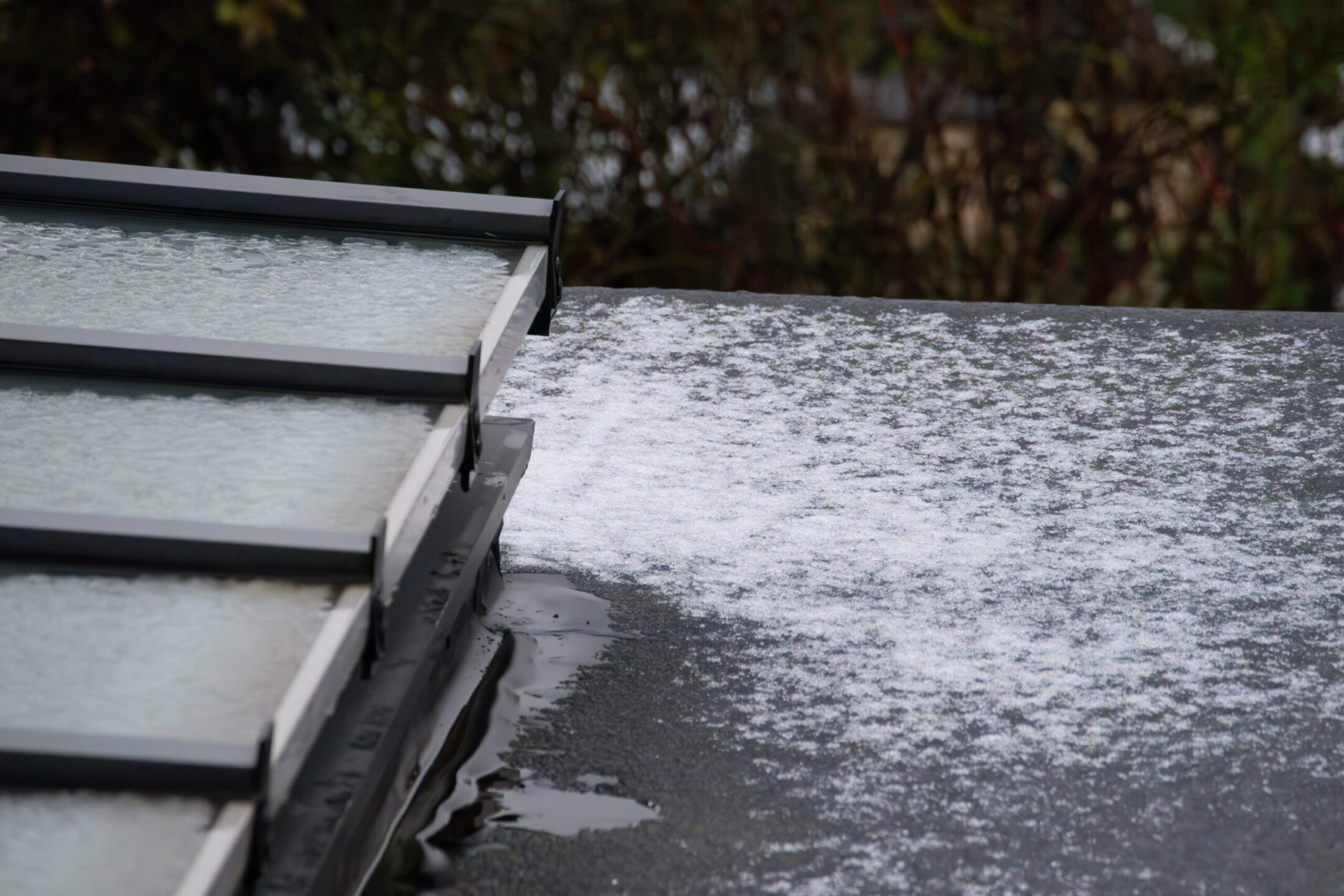
After a major storm, flat roof hail damage is one of the most commonly missed issues property owners face, especially in areas like Kalispell where hailstorms, heavy rain, and sudden temperature shifts are common throughout the year. Unlike steep-slope roofing systems, flat roofs rely on a continuous membrane that can conceal damage below the surface, allowing moisture to build quietly until leaks appear weeks or even months later. This risk increases for an aging roof that has already endured years of storm exposure. In Montana, freeze-thaw cycles can accelerate hidden deterioration and turn minor storm damage repairs into larger structural problems.
- Hail damage is not always visible: Flat roof membranes can weaken without obvious punctures
- Flat roofs depend on proper drainage: Even shallow dents can disrupt water flow and cause pooling
- Insurance timing matters: Waiting too long to report damage can complicate the insurance claim process
- Early inspections reduce repair costs: Small issues escalate quickly if left unaddressed.
We’re proud to serve home and business owners in Kalispell, MT, and nearby communities with flat roof hail damage inspections, repairs, and more.
How Hail Damages Flat Roofs
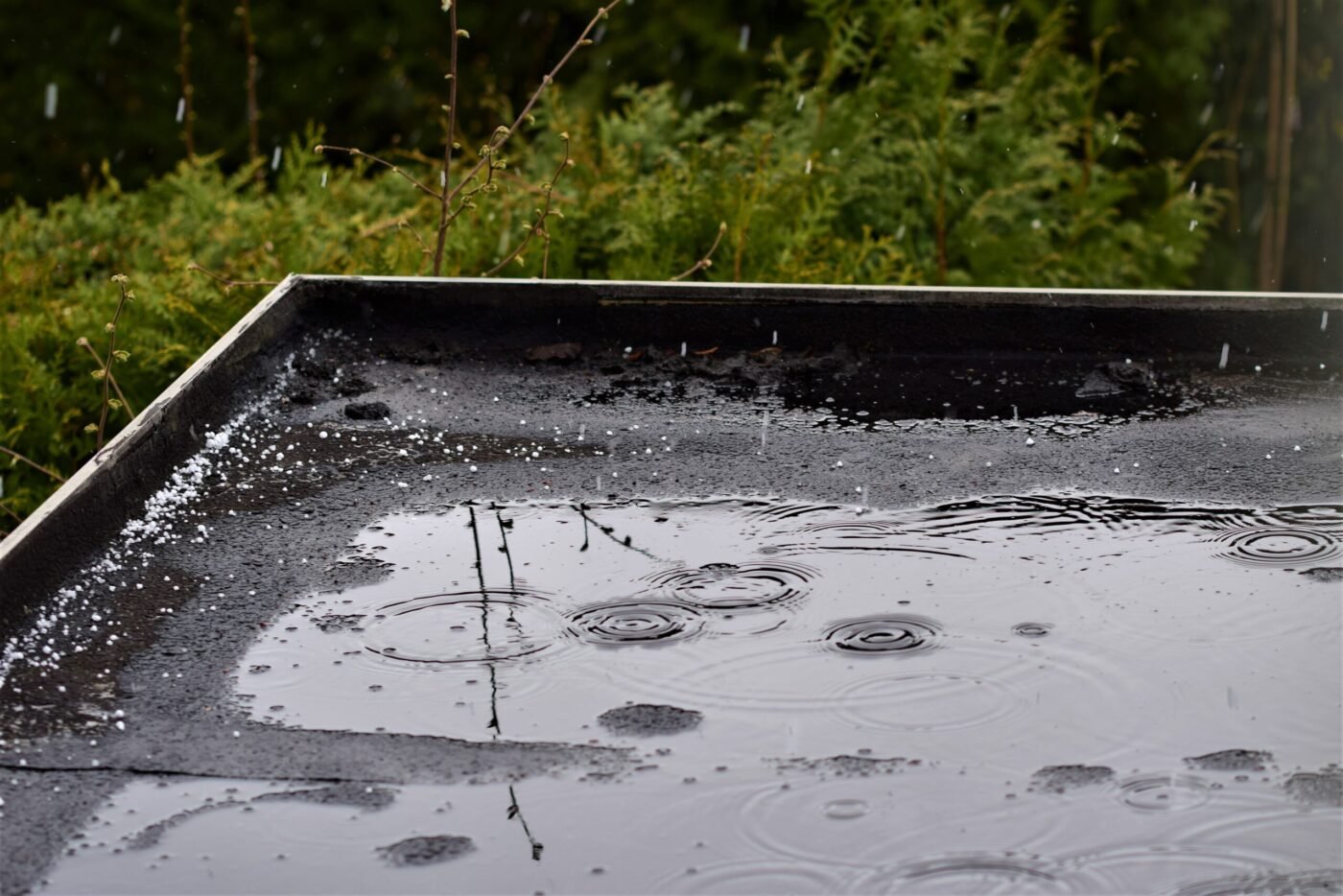
Flat roofs take the full force of hail impact, which affects both the surface membrane and the layers beneath it. In Montana, hail often arrives alongside strong winds, making wind damage a common companion issue during severe storms. This combination increases stress on flat roofing systems and flat roof hail damage, especially when compared to metal roofs that shed hail differently.
- Membrane indentations: Small dents interrupt water flow and natural drainage paths.
- Surface cracking: Aging or brittle materials fracture when struck by hail.
- Seam separation: Impact pressure weakens welded or adhered seams.
- Insulation compression: Hail can force moisture deeper into the roof system.
Flat Roof Hail Damage: Why Fast Action Makes a Big Difference
Time plays a major role in how costly flat roof hail damage becomes. When hail weakens a flat roof membrane, every rainfall or snowmelt that follows increases moisture exposure. In Kalispell and across northwest Montana, roofs are routinely exposed to snow accumulation, spring runoff, and repeated freeze-thaw cycles that expand small punctures and stressed seams.
Delaying action often complicates storm related insurance claims, especially when interior damage appears long after the original event. Acting quickly helps property owners fix hail damage before it affects insulation, decking, or interior spaces, while also ensuring documentation aligns with insurance requirements.
5 Steps to Spot and Fix Flat Roof Hail Damage
The steps below outline a practical, proven approach property owners can follow after a hailstorm. Each step helps identify damage early and prevents small problems from turning into major repairs.
1. Start with a Safe Ground-Level Inspection
Begin by scanning your roof from the ground once conditions are safe. After Montana hailstorms, debris and lingering ice can remain on rooftops, so safety should always come first. You are not looking for perfection, only signs that hail or wind may have caused disruption.
- Dented metal components: Gutters, vents, flashing, and nearby metal roofs often show impact first.
- Displaced debris: Gravel or branches pushed into new areas after the storm.
- Visible pooling: Water sitting where it did not before the storm.
2. Watch for Changes in Drainage and Pooling
Flat roofs are designed to drain efficiently, so any new pooling is a red flag. Standing water often forms where hail compressed the membrane or insulation beneath it. In colder Montana months, pooled water can refreeze overnight, expanding cracks and seams even further and increasing the need for storm damage repairs.
- Blocked drains: Storm debris restricting water flow.
- New depressions: Impact areas collecting water.
- Persistent moisture: Water remaining longer than normal drying periods.
3. Document All Visible Signs of Flat Roof Hail Damage
Clear documentation supports both contractors and insurance adjusters. Even small details matter later if damage worsens or spreads, especially when multiple storms hit during the same season. Photos taken shortly after the storm provide valuable evidence during the insurance claim process.
- Surface photos: Tears, cracks, or discoloration on the roof membrane
- Wide-angle shots: Overall roof condition after the hail event
- Interior symptoms: Ceiling stains or damp odors following rainfall or snowmelt.
4. Schedule a Professional Flat Roof Inspection
Professional inspections uncover hidden damage that cannot be seen from the ground. Roofing specialists assess membrane thickness, seams, flashing, and penetrations to determine whether hail affected only the surface or deeper layers. This step is especially important for an aging roof, where existing wear can make hail and wind damage more severe.
- Seam testing: Identifying stretch or separation
- Moisture checks: Detecting trapped water beneath the membrane
- Flashing evaluation: Ensuring vulnerable edges remain sealed.
5. Complete Repairs or Replacement Promptly
Once damage is confirmed, delaying repairs increases risk. Even minor punctures expand with temperature swings, additional storms, and high winds common throughout the Flathead Valley.
- Targeted patches: Effective for isolated damage on newer roofs.
- Section replacements: Necessary when hail affects larger areas.
- Full replacement: Often recommended for an aging roof with widespread issues.
How Insurance Claims Typically Work for Hail Damage
Insurance coverage often applies to flat roof hail damage, but the process can feel overwhelming without guidance. Most insurance companies require proof that the damage resulted from a specific storm event, along with professional inspection reports and clear documentation.
- Prompt reporting: File claims soon after discovering damage.
- Professional reports: Contractor documentation strengthens storm related insurance claims.
- Policy awareness: Some policies include separate hail or wind deductibles.
Working with an experienced roofing contractor helps property owners navigate the insurance claim process efficiently and avoid unnecessary delays.
Flat Roof Materials and Their Response to Hail
Not all flat roofing materials perform the same under hail impact. Knowing what type of roof you have helps set expectations for repairs and long-term durability.
| Material | Hail Resistance | Common Issues | Repair Complexity |
| TPO | Medium | Dents, surface tears | Moderate |
| EPDM | Medium-High | Seam stress, depressions | Moderate |
| PVC | High | Light surface marking | Lower |
| Modified Bitumen | Medium | Cracking at seams | Moderate-High |
Long-Term Effects of Ignoring Flat Roof Hail Damage
Hail damage that goes untreated rarely stays contained. Moisture continues to spread beneath the membrane, often leading to more extensive and costly repairs later.
Structural Deck Deterioration
Water trapped below the membrane can weaken the roof deck over time, increasing the risk of sagging and structural repairs.
Insulation Breakdown and Energy Loss
Wet insulation loses effectiveness, leading to higher heating costs during Montana winters and reduced energy efficiency year-round.
Interior Water Damage
Hidden leaks eventually appear inside as ceiling stains, wall damage, and moisture conditions that support mold growth.
Additional Tips to Reduce Future Hail Damage
Preventative maintenance improves roof performance during future storms and helps identify vulnerabilities early.
- Clean drains regularly: Clear drainage reduces pooling risks
- Schedule annual inspections: Especially before storm season
- Remove rooftop debris: Loose items increase impact damage
- Upgrade materials when possible: Impact-resistant systems protect aging roofs.
Montana Roofing Solutions Protects Your Flat Roof Investment
Flat roof hail damage requires experience, speed, and attention to detail. Montana Roofing Solutions provides thorough inspections, clear documentation, and reliable storm damage repairs designed for Montana’s demanding weather conditions. Our team works with homeowners and property managers in Kalispell and surrounding areas to address hail and wind damage efficiently while assisting with storm related insurance claims when needed.
Contact Montana Roofing Solutions today for a free inspection or repair estimate and make sure your flat roof is ready for whatever the next Montana storm brings.