Best Roof Sealant for Leaks: 5 Options and Application Strategies
A single unaddressed leak can quietly ruin insulation, drywall, and framing before a stain ever shows on the ceiling. Choosing the best roof sealant for leaks is one of the simplest ways homeowners stop small problems from becoming expensive ones, especially in a climate swinging between heavy snow and summer heat. Whether patching a gap around flashing or protecting seams before winter, understanding your options througha full roofing solution built for your home makes the difference between a quick fix and a lasting one. This guide breaks down the most reliable sealants and how to apply them.
In this guide, you will learn:
Why sealant choice affects how long a roof repair actually lasts
Five of the most effective sealant types for different leak situations
Step by step application strategies that hold up in Montana weather
How to know when a sealant is the right fix versus when to call a professional
Why Sealant Choice Matters More Than Homeowners Think
Not all sealants are built the same, and using the wrong one can trap moisture, crack under temperature swings, or fail within a single season.Picking the right product for your roofing material and climate is what actually determines whether a repair lasts one winter or ten.
Weather resistance: A sealant that cannot flex with freeze thaw cycles will crack and let water back in within months.
Material compatibility: Asphalt, metal, and rubber roofing systems each respond differently to certain chemical bases, and the wrong match can void warranties.
Longevity: Higher quality sealants cost more upfront but often last five to fifteen years longer than budget alternatives.
Application ease: Some products cure fast and forgive minor mistakes, while others require precise conditions and experience to apply correctly.
Preventive value: The right sealant stops small cracks from spreading into structural leaks that require a full roof replacement.
Homeowners in Kalispell and surrounding areas deal with heavy snow loads followed by rapid spring thaw, which puts extra stress on seams, flashing, and any previously sealed area. That seasonal swing is exactly why sealant selection deserves more attention than it typically gets.
5 Best Roof Sealant Options for Leaks
Different leaks call for different products. Below are five of the most trusted sealant types, what they are best suited for, and where each one tends to fall short.
1. Silicone Roof Sealant
Silicone sealants are prized for their flexibility and resistance to extreme temperatures, which makes them a strong choice for Montana homes that experience both bitter cold winters and hot, dry summers. They bond well to most roofing materials and remain pliable for years without cracking.
Excellent UV resistance, so it holds up under direct sun exposure
Stays flexible in subzero temperatures without becoming brittle
Not paintable, so color matching can be limited
2. Acrylic Roof Coating and Sealant
Acrylic sealants are water based, easy to apply, and a favorite for do it yourself repairs on smaller leaks around vents or low slope sections. They are more affordable than silicone but do not perform quite as well in areas with constant moisture.
Dries quickly, often within a few hours in dry conditions
Works well on metal, asphalt, and single ply membrane roofs
Less effective in areas with standing water or constant dampness
3. Polyurethane Roof Sealant
Polyurethane sealants offer some of the strongest adhesion available and are commonly used for sealing seams, joints, and flashing where movement between materials is common. This makes them ideal for older homes where roofing components have shifted slightly over time.
High tensile strength for areas with structural movement
Resistant to ponding water, which makes it useful for flat sections
Longer cure time compared to silicone or acrylic options
4. Rubberized Asphalt Sealant
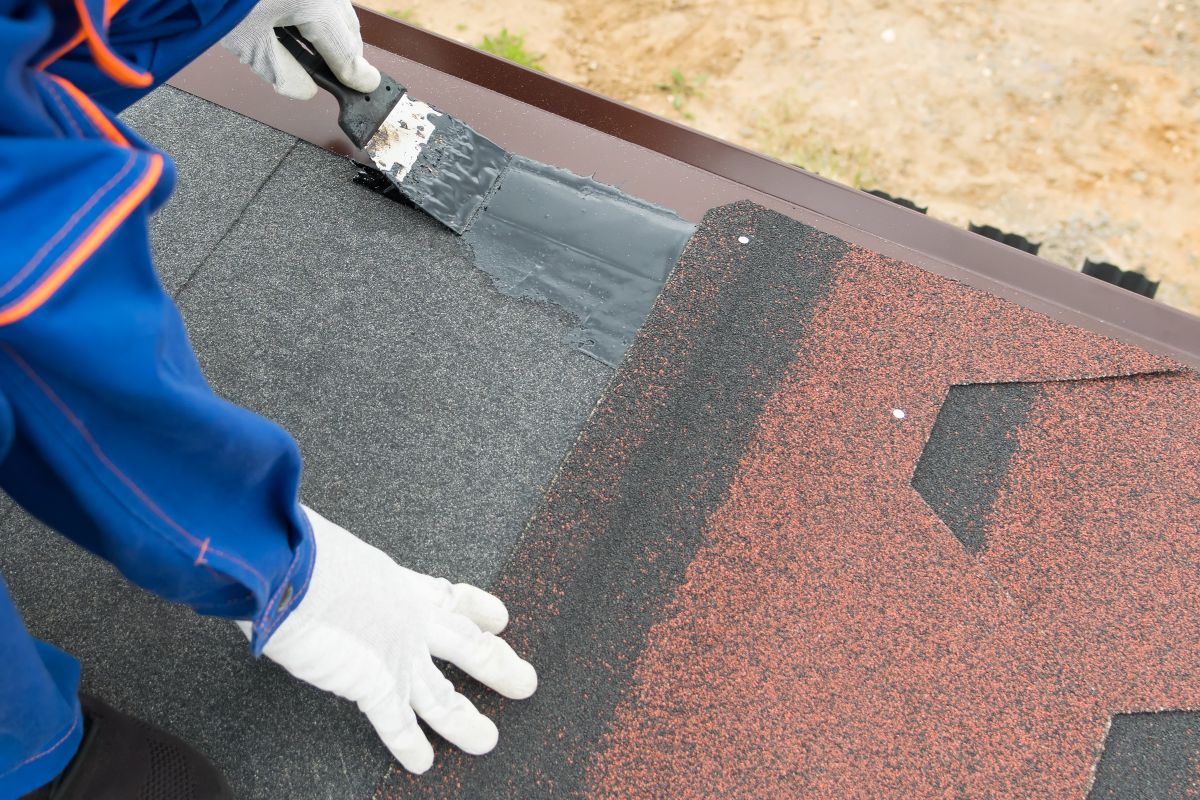
Rubberized asphalt sealants are a go to for asphalt shingle roofs, offering a thick, durable barrier against water intrusion around nails, vents, and shingle edges. They are budget friendly and widely available, making them a common choice for quick repairs.
Ideal for sealing around nail heads and shingle tabs
More affordable than silicone or polyurethane alternatives
Can become brittle over time in extreme cold without proper reapplication
5. Butyl Rubber Sealant
Butyl rubber sealant is known for its exceptional adhesive strength and its ability to remain flexible in a wide range of temperatures, which makes it well suited for sealing flashing, skylights, and chimney bases. It tends to be a favorite among professionals for detail work where precision matters.
Strong initial tack, which helps hold materials in place during application
Performs well in both hot and cold climates
Requires clean, dry surfaces for the best possible bond
How to Apply Roof Sealant the Right Way
Even the best product will fail if it is applied incorrectly. A careful, methodical approach makes the difference between a repair that lasts and one that needs to be redone within a year.
Prepare the Surface First
Before any sealant goes on, the area needs to be completely clean, dry, and free of loose debris or old, cracked sealant. Skipping this step is the single most common reason repairs fail early.
Remove dirt, moss, and granule buildup with a stiff brush
Scrape away any old, deteriorated sealant completely
Allow the surface to dry fully, especially after rain or snowmelt
Choose the Right Weather Window
Temperature and humidity both affect how well a sealant cures. Most products need dry conditions and moderate temperatures to bond properly, which can be a scheduling challenge for homeowners near Kalispell and surrounding areas where weather shifts quickly.
Check the forecast for at least 24 hours of dry weather after application
Avoid applying sealant in direct, intense heat when possible
Cold weather formulas exist for homeowners who cannot wait for warmer conditions
Apply in Thin, Even Layers
Thick globs of sealant may seem like extra protection, but they often crack or peel because the outer layer cures faster than the inside. Thin, even coats bond more securely and last significantly longer.
Use a caulking gun or trowel depending on the product and area size
Feather the edges so the sealant blends smoothly with the surrounding surface
Apply a second thin coat if the manufacturer recommends layering
Sealant Versus Professional Repair: Knowing the Difference
Sealant is a valuable tool, but it is not a permanent solution for every roofing problem. Understanding when a sealant is appropriate versus when a deeper repair is needed can save homeowners from costly water damage down the road.
Situation
Sealant Alone
Professional Repair Recommended
Small crack around a vent or pipe
Often sufficient
Not usually needed
Recurring leak in the same spot
Temporary fix only
Yes, indicates underlying damage
Missing or lifted shingles
Not effective
Yes
Ponding water on a flat roof
Short term help
Yes, drainage issue likely
Flashing separated from the roof deck
Not effective
Yes
Age of the roof: Older roofing systems near Kalispell and surrounding areas often have multiple small issues that sealant alone cannot resolve.
Frequency of the leak: A leak that keeps returning after sealing usually points to a structural issue rather than a surface gap.
Extent of the damage: Widespread wear across multiple areas is a sign the roof may need more than spot repairs.
Warranty considerations: Some manufacturer warranties require professional installation or repair to remain valid.
Homeowners around Kalispell and surrounding areas often reach out after a DIY sealant job has held for a season or two but starts failing again once the next freeze thaw cycle hits. That pattern is usually a sign the roof needs a trained eye rather than another tube of sealant.
It also helps to think about sealant as part of routine maintenance rather than a one time fix. Roofs that get a yearly inspection tend to catch small cracks and worn seams long before they turn into active leaks, which keeps sealant working the way it is meant to instead of masking a bigger problem underneath.
Protecting Your Home Starts With the Right Approach
Leaks rarely announce themselves clearly, which is why choosing the right sealant and applying it correctly matters so much for homeowners who want to avoid bigger repairs down the line. Whether you are dealing with a minor gap around flashing or a recurring leak that keeps coming back, having a clear strategy protects both your home and your budget.
If you are unsure which sealant fits your situation, or if a recurring leak suggests something more serious is going on, it is worth having a professional take a look before the next storm rolls through. Montana Roofing has helped homeowners throughout the region address leaks big and small, and our team can help you decide whether a simple sealant application or a more thorough repair is the right move. Reach out andcontact us today to schedule an inspection and get a straightforward plan for keeping your roof watertight all year long.