
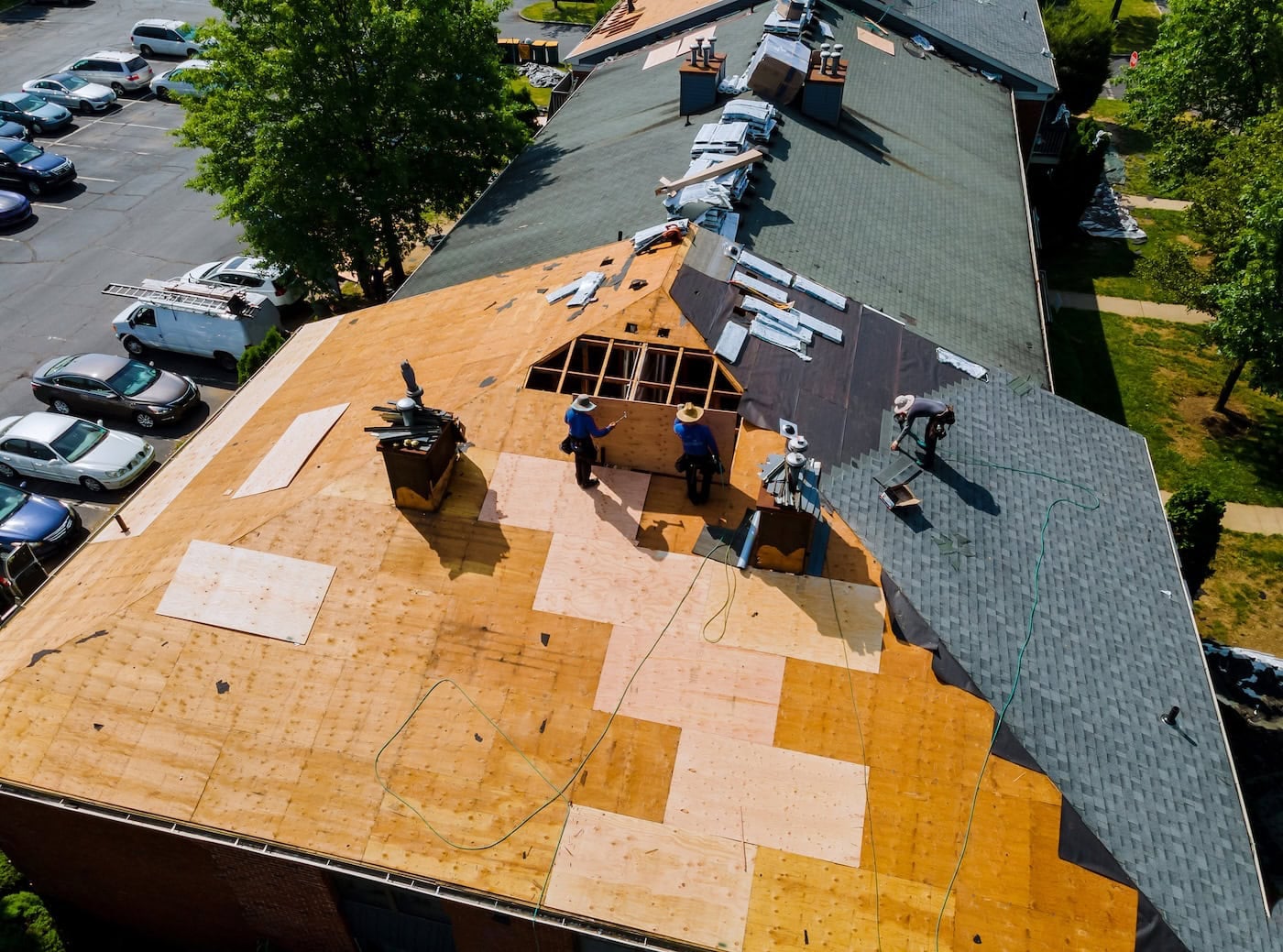
Most homeowners do not think about their roof until something goes wrong. The trouble is that by the time a roofing problem becomes obvious, it has usually been quietly developing for months or even years. Understanding the most common roofing problems before they escalate gives you the knowledge to catch issues early and avoid the kind of repair bills that could have been prevented. If you want professional roofing services that help you stay ahead of these problems, this guide is a solid place to start.
Here’s what we’ll cover:
- Roof leaks: The most common problem and what actually causes them
- Missing or damaged shingles: Why this happens and what it means for your roof
- Improper installation: How installation errors create long-term problems
- Poor ventilation: The hidden driver of premature roof aging
- Flashing failures: Why the details around edges and penetrations matter most
- Clogged gutters: How drainage problems translate into roofing damage
- Moss, algae, and debris buildup: What grows on your roof and what it costs you
Why Roofing Problems Tend to Compound

A roof problem that starts small rarely stays small. A single cracked shingle allows moisture to reach the underlayment. Saturated underlayment leads to wet decking. Wet decking develops mold and rot. What began as a $200 repair quietly becomes a $5,000 project over the course of a Montana winter. This pattern repeats across virtually every type of roofing problem, and it is the primary reason that regular inspections and prompt repairs pay for themselves many times over.
The good news is that most roofing problems give off warning signs before they become serious. Knowing what to look for, and when to call a professional, puts you in a position to manage your roof proactively rather than reactively. In Somers, where seasonal weather swings push roofing systems hard, that proactive mindset matters even more.
7 Common Roofing Problems That Can Lead to Costly Repairs
These seven problems account for the vast majority of roofing repair calls. Each one is preventable or at least manageable when caught early, and each one becomes significantly more expensive the longer it goes unaddressed.
1. Roof Leaks
Leaks are the most common and most dreaded roofing problem homeowners face. What makes them particularly tricky is that water rarely enters and exits through the same point — it can travel along rafters, underlayment, and decking before showing up as a stain on a ceiling several feet away from the actual breach point. This makes leak diagnosis a job that benefits enormously from professional training and systematic inspection.
- Common entry points: Flashings around chimneys, skylights, and vent pipes are the most frequent sources of leak entry, followed by damaged shingles and compromised valleys
- Seasonal triggers: Montana’s freeze-thaw cycles and ice dam formation in winter create roof conditions that accelerate leak development at vulnerable points
- Interior indicators: Ceiling stains, peeling paint near rooflines, musty attic odors, and visible daylight in attic spaces are all signs a leak may already be active
2. Missing or Damaged Shingles
Shingles protect the underlayment and decking from direct weather exposure. When a shingle is missing, cracked, or curling, that protection is compromised at that specific point. High winds are the most common cause of missing shingles in Montana, but aging, hail impact, and improper installation can all lead to shingle failure before the end of the material’s rated lifespan.
- Wind damage pattern: Shingles at roof edges, eaves, and rakes are most vulnerable to wind uplift; missing shingles in these areas after a storm warrant a full inspection
- Granule loss: Shingles that are still in place but heavily stripped of granules are nearly as vulnerable as missing shingles, as the exposed asphalt layer deteriorates rapidly under UV exposure
- Matching challenges: Replacing individual shingles on an older roof often results in visible mismatches; widespread shingle damage may make a full replacement more practical
3. Improper Installation
Poor installation is one of the most consequential and least visible roofing problems. According to the National Roofing Contractors Association, up to 40% of roofing issues are attributable to improper installation, making contractor selection one of the most important decisions in any roofing project. Installation errors range from incorrect fastener placement and inadequate underlayment overlap to improperly sealed flashings and ventilation systems that do not meet manufacturer specifications.
- Fastener errors: Too few nails, nails driven at the wrong angle, or nails placed outside the manufacturer’s specified zone all reduce a shingle’s wind resistance dramatically
- Underlayment shortcuts: Skipping or improperly lapping underlayment leaves the decking vulnerable to moisture if shingles are ever lifted or compromised
- Flashing installation: Improperly set or unsealed flashing around penetrations is the leading cause of leak development in otherwise intact roofing systems
4. Poor Attic Ventilation
Ventilation is one of the most overlooked aspects of a roofing system, and one of the most consequential. An improperly ventilated attic traps heat in summer, driving moisture and accelerating shingle aging from below. In winter, heat escaping from living spaces into a poorly ventilated attic warms the roof unevenly, creating the conditions for ice dam formation along the eaves.
- Summer heat buildup: Trapped attic heat can raise roof deck temperatures to levels that soften the adhesive strips on shingles, reducing their wind resistance and accelerating degradation
- Ice dam formation: Uneven roof temperatures caused by poor ventilation allow snow to melt and refreeze at the eaves, forcing water under shingle edges and into the structure
- Moisture accumulation: Without adequate airflow, condensation builds up in the attic space, promoting mold growth, insulation degradation, and wood rot in the decking and rafters
5. Flashing Failures
Flashing is the thin metal material installed at all roof transitions, penetrations, and edges to prevent water from entering where the roofing material cannot provide a continuous seal. It surrounds chimneys, skylights, vent pipes, dormer walls, and roof-to-wall connections. Flashing failures are the single most common source of active roof leaks, and they are frequently missed in casual inspections because the damage is subtle until it becomes severe.
- Corrosion and cracking: Older metal flashing deteriorates over time from exposure to the elements; cracked or rusted flashing allows water to pass behind it with every rain event
- Sealant failure: Many flashing installations rely on caulk or roofing cement at joints, which eventually dries, cracks, and separates as it ages through temperature cycles
- Improper step flashing: Flashing along dormer walls and sidewalls must be installed in overlapping steps with the shingle courses; incorrect installation here is a primary source of hidden leaks
6. Clogged or Damaged Gutters
Gutters are technically not part of the roof itself, but they play a critical role in protecting it. When gutters clog with leaves, debris, or ice, water backs up and pools along the roof edge, saturating the fascia boards, soffit, and the bottom course of shingles. Over time this leads to rot, mold, and structural damage that extends well beyond what the gutter problem alone would suggest.
- Ice dam connection: Clogged gutters in Montana winters prevent proper drainage, accelerating ice dam formation along eaves and creating the pressure that forces water under shingles
- Fascia and soffit rot: Overflowing gutters direct water behind the gutter and onto the fascia board repeatedly, eventually rotting the wood and compromising the roof edge structure
- Gutter separation: Gutters that have pulled away from the fascia create gaps that allow water to flow freely behind the gutter and down the exterior wall
7. Moss, Algae, and Debris Buildup

Montana’s wet springs and shaded roof sections create ideal conditions for moss and algae growth. Both are more than cosmetic problems. Moss holds moisture against the shingle surface, accelerating granule loss and shingle degradation. Algae causes the dark streaking visible on many older roofs and, while less physically damaging than moss, indicates a moisture-retaining environment that can support further biological growth.
- Moss root damage: Moss roots work into the granule layer and the asphalt mat beneath it, physically separating the shingle materials and accelerating deterioration
- Debris accumulation: Leaves and pine needles that accumulate in valleys and against penetrations trap moisture and prevent proper drainage, creating extended wet conditions that accelerate shingle wear
- Treatment options: Zinc or copper strips installed at the ridge release trace metals during rain events that inhibit moss and algae growth; affected roofs can also be treated with appropriate cleaning solutions by a professional
How to Spot Roofing Problems Early
Catching roofing problems early is the most effective way to keep repair costs manageable. A few simple habits significantly reduce the risk of a small issue becoming a large one.
| Warning Sign | Likely Problem | Urgency |
| Ceiling water stains | Active leak | High |
| Granules in gutters | Shingle aging or hail damage | Medium |
| Missing shingles after wind | Wind damage | High |
| Dark streaks on shingles | Algae growth | Low to Medium |
| Ice dams at eaves | Poor ventilation | Medium |
| Sagging roof sections | Structural or moisture damage | High |
| Peeling paint near roofline | Moisture or ventilation issue | Medium |
Common Questions About Roofing Problems
Homeowners dealing with roofing concerns tend to ask the same questions. Here are direct answers to the ones we hear most often.
How often should I have my roof inspected?
The National Roofing Contractors Association recommends professional inspections at least twice per year, typically in spring and fall, plus after any significant storm event. In Montana, where hail and wind seasons can be intense, a post-storm inspection is especially valuable. Many roofing problems that would have been a minor repair in spring become major repairs by fall if left unaddressed through a summer of UV exposure and weather cycling.
Can I inspect my own roof?
A ground-level walk around your home after a storm or in spring and fall can reveal obvious issues like missing shingles, granule accumulation in gutters, or visible sagging. However, a professional inspection identifies damage that is invisible from the ground, including soft spots in shingle mats, flashing separation, underlayment moisture, and early-stage rot in the decking. Ground-level observation is a useful supplement, not a substitute, for professional inspection.
How do I know if a roofing problem requires repair or full replacement?
The general guidance from roofing professionals is that roofs in the first two-thirds of their expected lifespan are often good candidates for repair when damage is localized. Widespread damage, systemic ventilation or installation failures, or a roof approaching the end of its lifespan are all indicators that full replacement is the more cost-effective long-term path. A professional assessment gives you the specific information needed to make that call confidently.
What is the most expensive roofing problem to fix?
Structural damage — rot in the decking, rafter damage, or compromised fascia and soffit from prolonged moisture exposure — is typically the most expensive roofing problem to address because it requires not just a new roof covering but also repairs to the structure beneath it. This type of damage almost always originates from a smaller problem that went unaddressed, which is why early detection and repair save homeowners the most money over time.
Montana Roofing Solutions is proud to serve homeowners and business owners in Somers, MT, and the surrounding communities with thorough roof inspections, professional repairs, and straightforward guidance on keeping your roof healthy for the long haul.
Montana Roofing Solutions Catches Problems Before They Cost You
The roofing problems covered in this guide are not rare or unusual — they affect homes across Montana every season. What separates a minor repair from a major one is almost always how quickly the problem was identified and addressed. At Montana Roofing Solutions, we bring the expertise to spot what most homeowners miss, the honesty to tell you exactly what your roof needs, and the craftsmanship to fix it right the first time. Contact Montana Roofing Solutions today to schedule your professional roof inspection.