
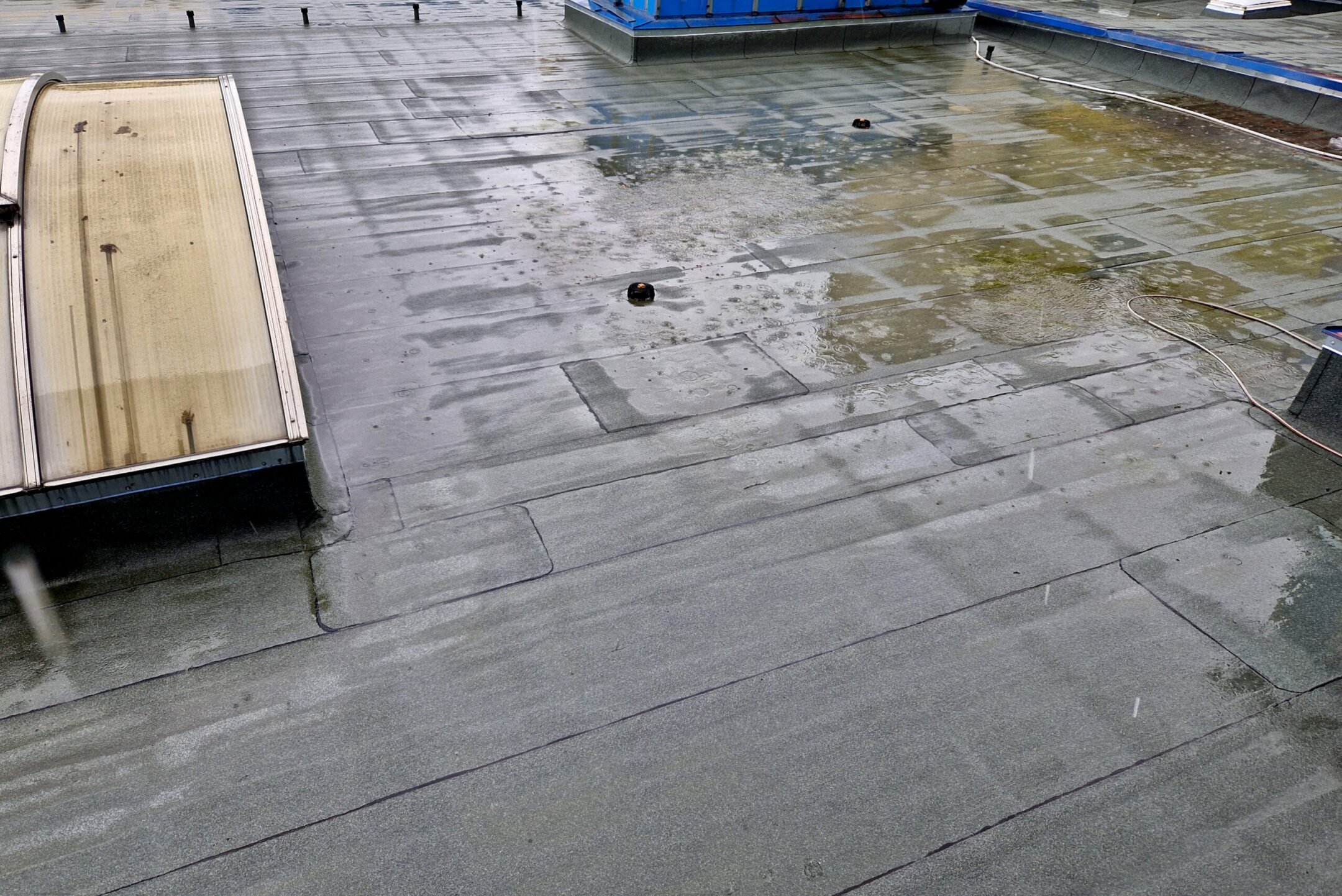
Not all roof leaks are easy to find, and flat roof leak repair can be one of the trickiest systems to diagnose. Their low-slope design and membrane-based construction can hide problems until water shows up indoors. In Whitefish and across northwest Montana, rapid freeze-thaw cycles, heavy snow loads, spring runoff, and wind-driven rain create ideal conditions for hidden moisture problems. Flat roof leaks often go unnoticed until the damage becomes harder and more expensive to fix. Understanding what causes leaks, how to spot them early, and how to address them properly makes a significant difference.
- Leaks often appear far from the source: Water can travel across insulation and decking before becoming visible.
- Flat roofs rely on precise drainage and sealing: Small disruptions allow moisture intrusion.
- Ignoring early signs leads to higher repair costs: Delays increase structural and interior damage.
- Reliable repair requires experience, not guesswork: Montana weather demands durable solutions.
We’re proud to serve home and business owners in Whitefish, MT, and surrounding areas with flat roof repair, inspection, and replacement services.
Why Flat Roofs Leak in the First Place
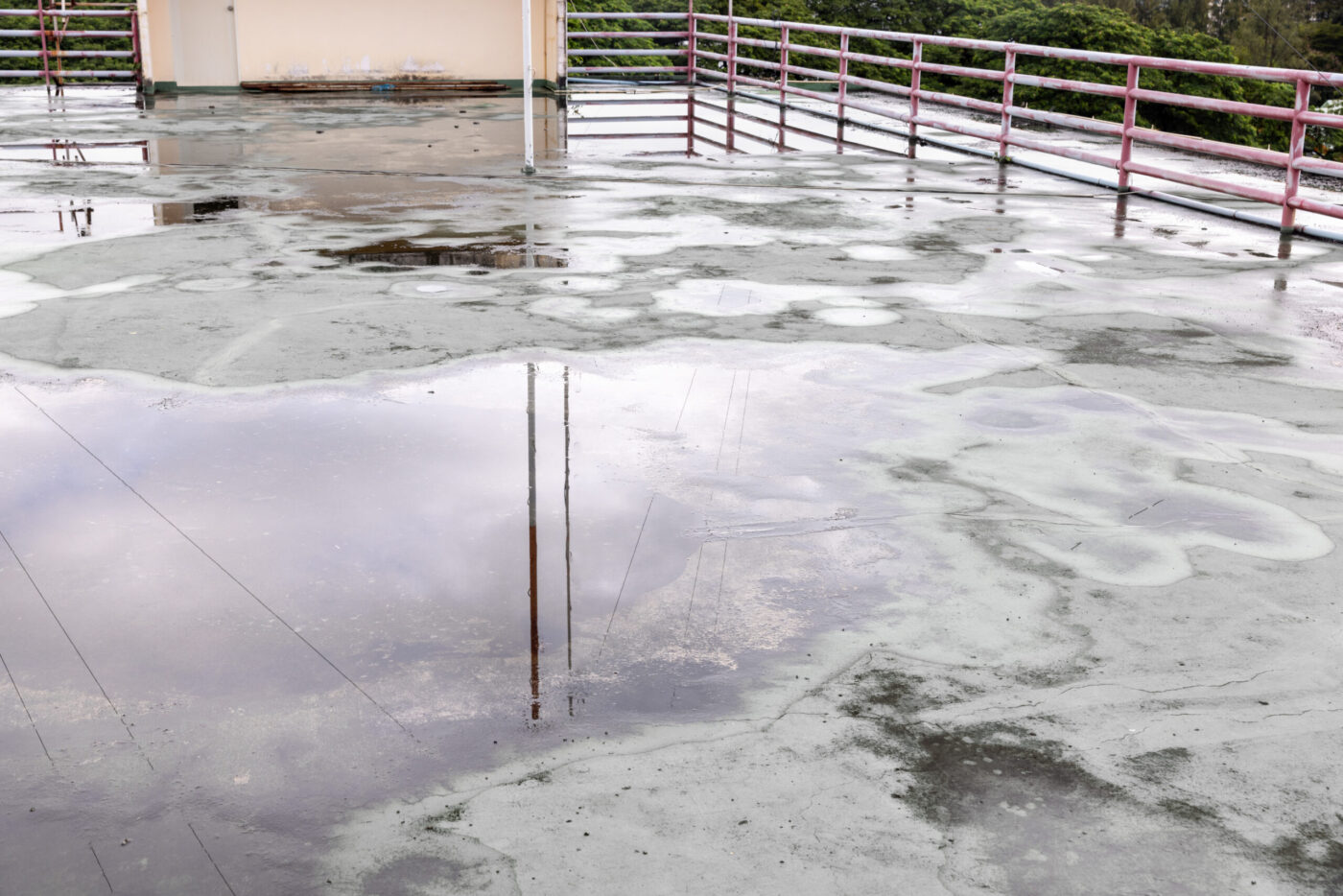
Flat roofing systems do not shed water the way pitched roofs do. Instead, they depend on proper drainage, sealed seams, and a durable surface to keep moisture out. Over time, even small weaknesses can turn into leak points, especially after harsh Montana winters, wind damage, or long periods of standing water following snowmelt.
- Age-related wear: Materials break down after years of sun exposure, snow, and moisture.
- Poor drainage: Blocked or undersized drains allow pooling and seepage.
- Seam failure: Movement and weather weaken welded or adhered joints.
- Foot traffic: Service work can puncture or stress roofing material.
Signs Your Flat Roof May Be Leaking
Leaks in a flat roof do not always show up as dripping water. In many cases, the first warning signs are subtle. By the time interior damage is visible, moisture has already traveled beneath the surface of the existing roof. Regular inspections, especially after Whitefish storms or heavy snowmelt, help catch problems early.
- Stains on ceilings or upper walls: Discoloration often signals hidden moisture intrusion.
- Musty odors in top-floor rooms: Persistent damp smells indicate trapped moisture.
- Bubbling or soft spots in the roofing surface: These areas suggest water beneath the membrane.
- Standing water that lingers more than 48 hours: Ponding increases the risk of seam failure.
5 Effective Solutions for Flat Roof Leak Repair
Repairing leaks properly requires more than surface patching. Long-term solutions focus on identifying the true source of the problem and restoring the roof system as a whole.
1. Locating the Actual Source of the Leak
Flat roofs are well known for misleading symptoms. Water may enter in one area and travel across the roof structure before becoming visible indoors. Professional inspections use targeted methods to trace moisture paths accurately. This step is critical because repairing the wrong area often leads to repeat leaks.
- Thermal imaging and moisture scans: Advanced tools help identify hidden water.
- Inspection of vents, drains, skylights, and edges: These are common entry points.
- Roof core samples: Used when trapped moisture is suspected.
2. Repairing the Damaged Area of the Roof
Once the source is confirmed, repairs are matched to the roof material. TPO, EPDM, PVC, and modified bitumen systems all require different techniques. Professional repair methods provide far more reliable results than temporary patch products.
- Heat welding for thermoplastic seams: Restores integrity on TPO and PVC systems.
- EPDM patching with compatible adhesives: Ensures proper bonding.
- Surface cleaning and priming before patching: Improves long-term durability.
3. Improving Drainage Conditions
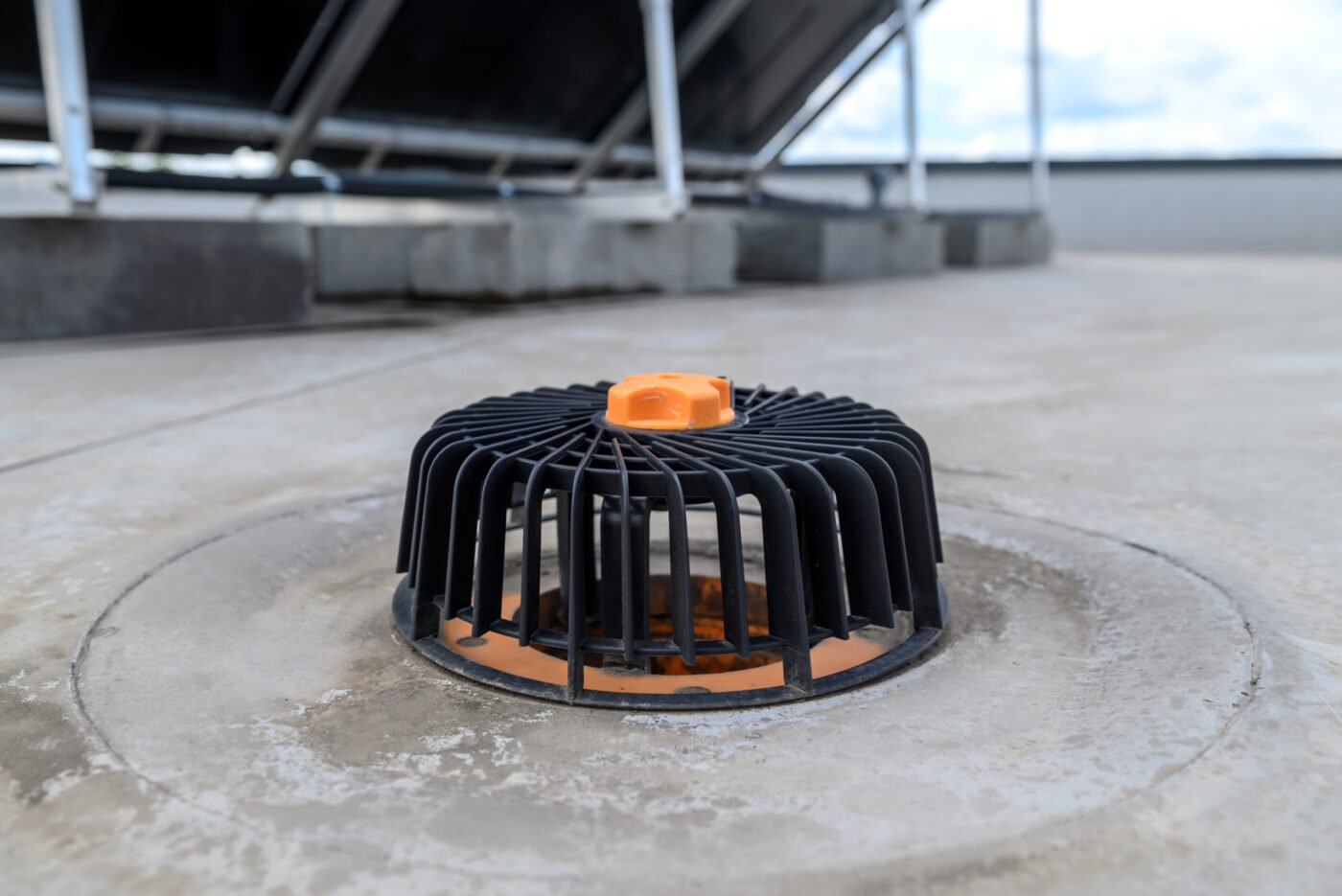
Poor drainage is one of the most common contributors to recurring leaks. When water sits on a flat roof, it increases stress on seams and penetrations. Improving drainage and adjusting low areas helps protect the entire roof system over time.
- Cleaning and repairing scuppers and internal drains: Maintains water flow.
- Re-sloping low areas: Prevents persistent ponding.
- Installing tapered insulation: Promotes effective runoff.
4. Reinforcing Vulnerable Flashing and Seams
Roof edges, penetrations, and equipment bases experience constant movement and weather exposure. Reinforcing these areas helps prevent water intrusion during heavy rain, snowmelt, or wind-driven storms common in the Whitefish area.
- Replacing failed flashing or edge metal: Restores secure transitions.
- Sealing HVAC curbs and pipe penetrations: Prevents entry points.
- Applying membrane-compatible sealants and boots: Ensures long-term flexibility.
5. Planning for Replacement on Older Roofs
If the roof age is advanced or leaks continue to return, repairs may only offer short-term relief. In these cases, replacing sections or addressing the entire roof may be the more cost-effective long-term solution. Replacement also allows for upgrades such as improved insulation or reflective coatings suited for Montana’s temperature extremes.
- Section replacement: Effective for localized damage.
- Full replacement: Recommended when systems near the end of service life.
- Upgrade opportunities: Improve energy efficiency and storm resistance.
Working Through the Insurance Claim Process
Leaks caused by storms, hail, or wind damage may be covered by insurance, but the insurance claim process requires preparation. Documentation, inspection reports, and timely communication with your insurance company all play an important role.
- Document damage early: Take photos and notes immediately after storms.
- Contact your insurance company promptly: Avoid delays in reporting.
- Request a written inspection report: Professional documentation strengthens claims.
How Flat Roof Materials Respond to Moisture
The type of roofing membrane affects how leaks develop and how repairs are handled. Below is a general comparison of common flat roofing materials.
| Material | Common Leak Behavior | Repair Complexity |
| TPO | Seam splitting, punctures | Moderate |
| EPDM | Shrinkage, seam peeling | Moderate |
| PVC | Edge separation | Lower |
| Modified Bitumen | Blistering, seam failure | Moderate-High |
Flat Roof Leak Prevention: What to Do Next
Preventing leaks starts with proper maintenance. Whether maintaining a newer system or extending the life of an existing roof, regular care reduces long-term costs.
- Schedule annual inspections: Especially after winter and major storms.
- Keep drains, gutters, and rooftop systems clear: Prevent standing water.
- Track repairs and storm events: Maintain records for future reference.
- Investigate stains or odors early: Address small issues before they expand.
Montana Roofing Solutions Protects Your Flat Roof
Montana Roofing Solutions provides trusted flat roof leak repair services for homeowners and property managers throughout Whitefish, MT, and nearby communities. Whether your roof needs targeted repairs, reinforced seams, improved drainage, or a full evaluation of the entire roof system, our team delivers clear answers and dependable workmanship built for Montana’s demanding climate.
Contact Montana Roofing Solutions today to schedule a free inspection and protect your property before small leaks turn into major damage.